
Why Is Proper Gutter Installation Important for Protecting Your Roof?
Written By:
Asch Roofing
Published By:
November 18, 2026
Read time:
5 min
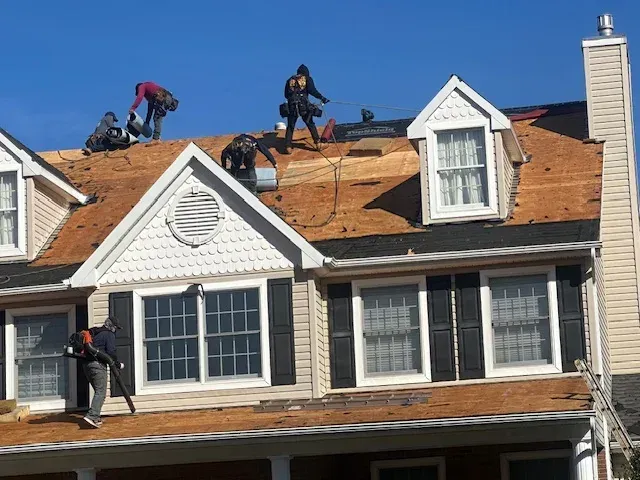
Short answer: gutters pull rain off your roof edge and carry it away from your house, and a sloppy install lets that water do real damage instead. Asch Roofing has worked on Central New Jersey roofs since 1955, and below you’ll find how gutters work, what a good install looks like, the signs of a bad one, and what to ask before you hire. If you’re comparing gutter installation Monmouth County NJ options, a few small details decide whether your roof stays dry for decades.
What Your Gutters Do All Day While You’re Busy With Everything Else
Think about the last big storm. A roof covering about 1,500 square feet can drop close to a thousand gallons over its edge during a one-inch rain. That’s a lot of water, and your gutters catch every drop and hand it off to the downspouts. When it all works, you never think about it. When it fails, water ends up under the shingles, behind the siding, and in the basement. Good residential gutter installation Monmouth County NJ work treats the roof, the gutters, and the siding like one team.
Slope, Hangers, and Downspouts Make or Break an Install
Slope is the first thing to check, and it’s the easiest to get wrong. A gutter needs a gentle tilt, about a quarter inch every ten feet, so water keeps rolling toward the downspout. Make it too flat and water just sits there, rusting the metal and breeding mosquitoes. Make it too steep, and water shoots right past the corner. Hangers matter just as much. A full gutter is heavy, and when rain, leaves, and snow pile on, loose or far-apart hangers let the whole run sag.
Downspouts finish the job. Most houses need one every thirty to forty feet, and each one should empty several feet from the foundation onto a splash block or extension. Professional gutter installers Monmouth County NJ homeowners hire will also size the gutter to the roof, since a 6-inch gutter handles a lot more water than a 5-inch one in a heavy storm. Proper gutter installation Monmouth County NJ standards cover every one of these details, every time.
How a Bad Install Shows Up From the Ground (Check Yours This Weekend)
Wait for the next rainy day, grab an umbrella, and walk around your house. Watch for water spilling over the front edge, gutters pulling away from the fascia, or dirty streaks on the siding under a corner. Peeling paint under the eaves, soft trim, and puddles against the foundation tell the same story. A stain around a skylight sometimes traces back to overflow farther up the roof, and skylight repair New Jersey crews often start by checking the gutter line. In winter, long icicles and a thick ridge of ice along the edge point to poor drainage. A short call to a company offering gutter installation services Monmouth County NJ homeowners rely on can confirm what you saw.
Unsure if your gutters are doing their job?
Why the Roof Itself Pays First When Gutters Fail
When water drips off the edges of the roof, it makes the fascia boards wet along with the decking behind the fascias. After some time, this makes the wood soft, causes the shingles along the edges to lose adhesion, and leaking begins. In addition, backed-up gutters force water to seep underneath the first row of shingles, just where the nails have been driven through. A leak after the rainstorm may require urgent roof repair NJ professionals to take care of, while slow leaks are more expensive to fix.
Winter adds ice dams. Water trapped at the eave freezes into a ridge, and the meltwater backs up under the shingles. Clean gutters and good attic ventilation lower that risk a lot. Older houses with slate roofs and built-in gutters need extra attention, since one leak at the gutter line can run straight down inside the walls.
Repair, Replace, or Start Over: How to Decide Without Guessing
Usually, all it takes for a loose hanging part or a leaking seam is a repair job. Gutters should be replaced when there are rust spots, sagging parts, cracks, or gutters that keep detaching from the building. It is also important to consider age, as many gutters have a lifespan of twenty years, based on the material used. Quotes for gutter replacement Monmouth County NJ must also be compared to an ongoing repair job, as it may be more expensive to fix your gutters three times within two years than to replace them.
A complete residential gutter installation Monmouth County NJ may include seamless runs, reducing the number of leaks, as well as guards preventing debris from entering the gutter. No matter what kind of gutters you choose, an efficient gutter installation Monmouth County NJ begins at the fascia and roof edge.
Siding, Gutters, and Roof Work All Share the Same Walls
The three professions have interrelated activities, and therefore carrying out the activities at once helps save time and avoid any blame game. The crew working on the siding installation for New Jersey residents works within the gutters anyway, and the vinyl siding chosen by New Jersey residents comes out better when the gutters are clean and level. When the siding or roofing activity is scheduled, gutter replacement NJ usually follows suit.
Protect your roof with a family-owned team that has served New Jersey since 1955.
Protect Your Roof Starting at the Edge, Before the Next Big Storm
The right gutters will ensure that your roof, siding, and foundation are all safe because the gutters move water to its proper place. You need to consider the slope, hangers, downspouts, and wood under the gutter when you are looking for gutter installation Monmouth County NJ services. Asch Roofing is a family-owned company that has been servicing Central New Jersey since 1955. The company’s team deals with roofs, siding, and gutters, from
roof installation services in New Jersey to repairs.
FAQs
How Do Properly Installed Gutters Prevent Roof Water Damage?
Properly installed gutters catch rain at the roof edge and carry it through downspouts, well away from your home. The right slope keeps water moving, and solid hangers keep the run steady. Hiring a pro for gutter installation in Monmouth County, NJ keeps the edge boards, shingles, and fascia dry, which stops rot and leaks early and protects the whole roof below.
What Happens When Gutters Are Improperly Installed?
Poor slope lets water pool and spill over, loose hangers let runs sag, and short downspouts dump water beside your foundation. The overflow soaks fascia boards, stains siding, and washes out your garden beds. Over time, wood rots, shingles at the edge fail, and leaks reach the attic. A bad install costs more to fix than a good one costs to do, so check the work early.
How Often Should Residential Gutters Be Inspected and Maintained?
Check your gutters at least twice a year, once in spring and once in late fall, plus after any big storm. Clear out leaves and debris, look for sagging or loose hangers, and watch for water spilling over the edge during rain. Homes near trees may need cleaning more often. Run a hose through the downspouts to confirm water flows freely and exits well away from the foundation.
Can Professional Gutter Installation Prevent Roof Leaks?
Yes, it prevents many common leaks at the roof edge. A pro sets the right slope, size, and hanger spacing, so water leaves the edge fast instead of backing up under shingles. Proper drip edge placement also guides water into the gutter instead of behind it. Gutters alone will fix nothing on a worn-out roof, yet good installation removes a common cause of leaks and rot.
How Do Gutters Protect Your Home’s Foundation and Roofing System?
Gutters collect roof runoff and release it several feet from the foundation, which keeps soil from washing out and basements from taking on water. Along the roof, the system protects fascia, soffit, and shingle edges from constant soaking. Extensions and splash blocks at downspouts add more protection. Together, these parts guard the whole house, from the roof down to the footing.